Bio
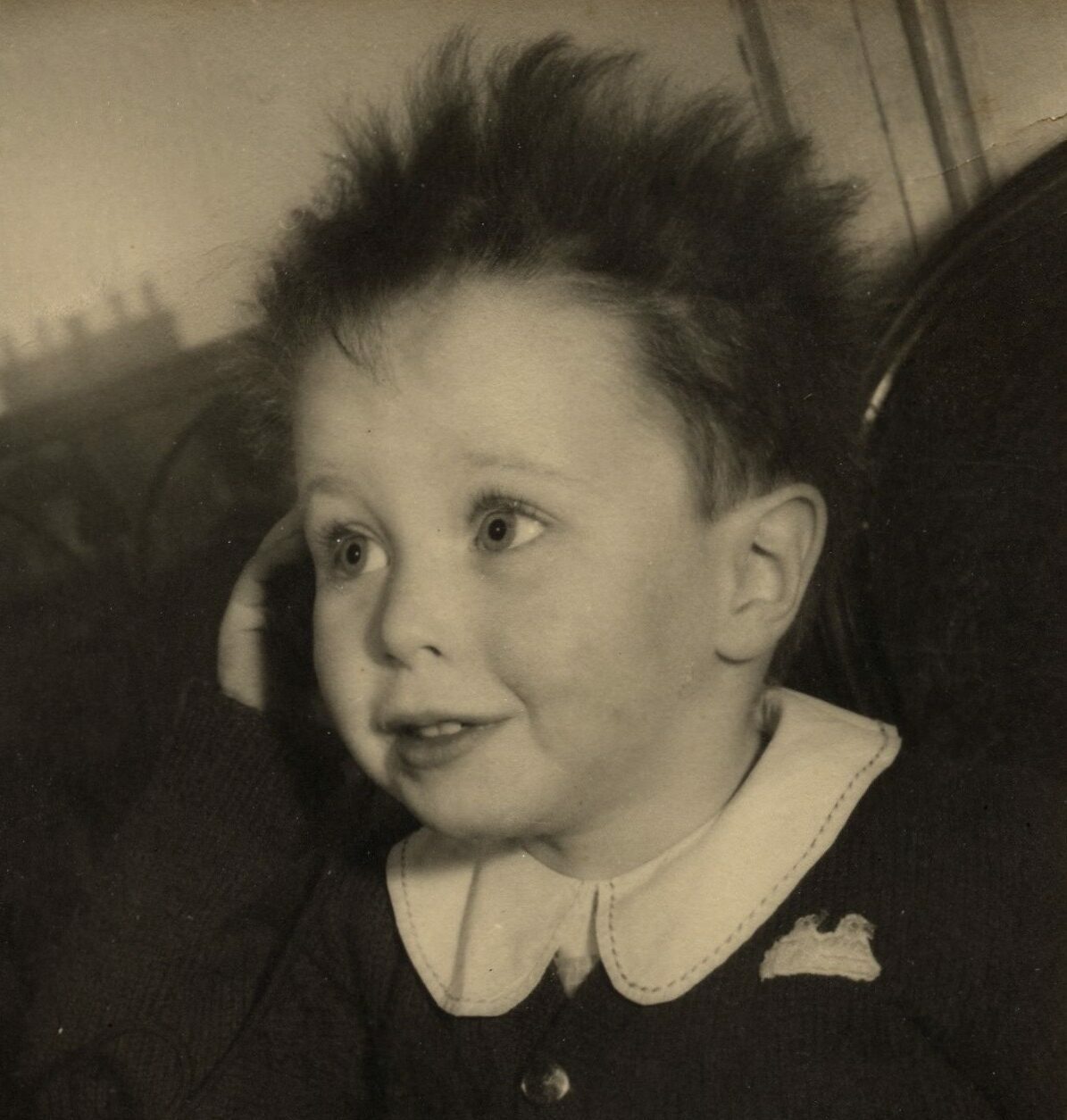
Nicolas Philibert was born in Nancy in 1951, grew up in Grenoble and has lived in Paris since the age of 20. After studying philosophy he turned to cinema and started as an intern and then assistant director, notably with René Allio and Alain Tanner.
In 1976, he embarked – with Gérard Mordillat – on the making of his first feature-length documentary, His Master’s Voice (La voix de son maître, 1978), in which a dozen bosses of large industrial groups (L’Oréal, IBM, Thomson, Elf…) talk about power, command, hierarchy, unions… gradually sketching the image of a future world dominated by finance.
From 1985 to 1987, he directed several mountain and sports adventure films for television. Having closed this parenthesis, he restarted on making feature-length documentaries, all of which would be theatrically released, starting with Louvre City (La Ville Louvre, 1990), in which a large museum reveals its inner workings to a film crew, something that had never happened before.
Next came In the Land of the Deaf (Le pays des sourds, 1993), Animals (Un animal, des animaux, 1995), Every Little thing (La moindre des choses, 1997) – at the La Borde psychiatric clinic – as well as an essay film with students from the National Theatre School of Strasbourg: Who Knows? (Qui sait?, 1998).
In 2001, Nicolas Philibert directed To Be and To Have, (Être et avoir), about the daily life of a “single class school” in a small village in the Auvergne region. This film was a huge success in France and around the world.
With Back to Normandy (Retour en Normandie, 2007), he returns to the locations of another film shot 32 years earlier by filmmaker René Allio with non-professionals, mostly farmers, in the main roles : I, Pierre Rivière, Having Slaughtered My Mother, My Sister, and My Brother… As a young assistant director, Nicolas Philibert had spent three months recruiting them, going from farm to farm
With Nénette (2010), filmed at the Ménagerie du Jardin des Plantes in Paris, he takes us on a strange encounter with the oldest resident: a female orangutan, in captivity for 37 years.
In La Maison de la radio (2013), he delves into the heart of Radio France, discovering what usually escapes notice: the mysteries and behind the scene of a media outlet whose very essence, sound, remains invisible.
Filmed in a nursing school, Each and Every Moment (De chaque instant, 2018) focuses on the highs and lows of a challenging apprenticeship during which students, often very young, are confronted early on with the fragility of life.
In 2023, On the Adamant (Sur l’Adamant), the first part of a triptych filmed within the Paris Centre psychiatric unit, received the Golden Bear at the 73rd Berlinale. The following parts, At Averroès & Rosa Parks, named after two units of the Esquirol psychiatric hospital (Charenton), and The Typewriter and Other Headaches (La machine à écrire et autres sources de tracas), were theatrically released the following year.
For 25 years, more than 130 tributes and retrospectives of Nicolas Philibert’s films have been organized around the world, from the British Film Institute (London) to MoMA (New York) and from the Royal Belgian Film Archive to La Cinémathèque française, via Amsterdam, Athens, Barcelona, Beijing, Beirut, Berkeley, Berlin, Bogota, Mumbay, Bratislava, Bucharest, Buenos Aires, Calcutta, Chicago, Copenhagen, Damascus, Edinburgh, Florence, Geneva, Harvard, Helsinki, Havana, La Rochelle, Lima, Lisbon, Ljubljana, Madras, Madrid, Melbourne, Mexico City, Milan, Montreal, Morelia, Moscow, Munich, Nantes, Nancy, New Delhi, Nice, Pärnu, Reykjavik, Rio de Janeiro, Santiago, São Paulo, Seoul, Shanghai, Sydney, Sofia, Stanford, Tbilisi, Tel Aviv, Thessaloniki, Tokyo, Vienna, Vilnius, Warsaw, Zagreb, Zurich…